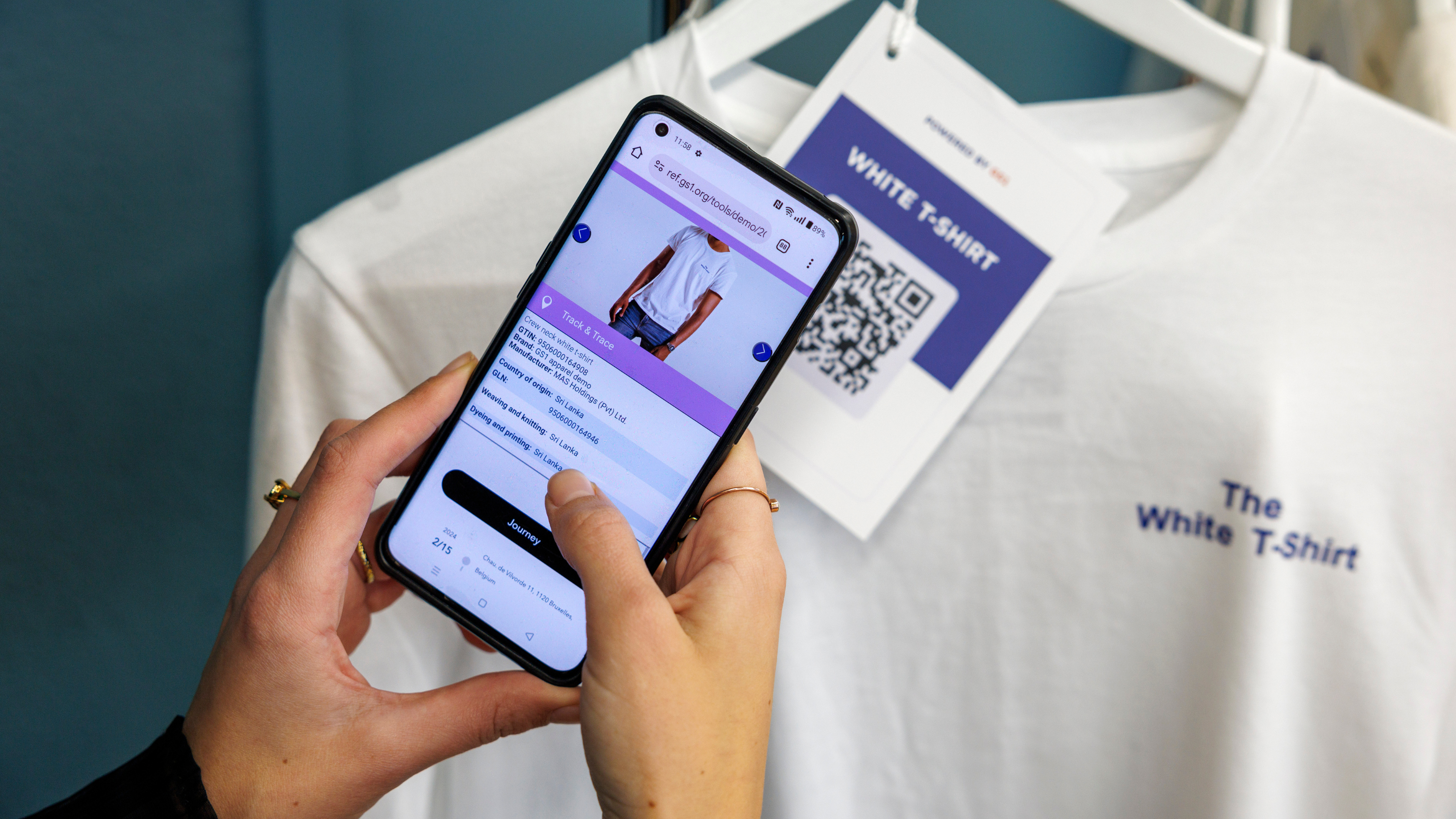
Discover the 5-step approach to implementing a successful Digital Product Passport
14 April 2025Are you ready to future-proof your business? Discover how to easily get started with the Digital Product Passport (DPP) and not only comply with upcoming regulations, but also benefit from the advantages of sustainable business practices.
What is a Digital Product Passport?
The Digital Product Passport (DPP) is an important building block of the European Green Deal, the European Union’s plan to achieve a circular economy by 2050. A Digital Product Passport provides detailed information about the sustainability of products, such as material composition, origin, and recycling possibilities. It helps users make more sustainable choices and contributes to the transition toward a circular economy.
Ultimately, all products placed on the European market will need to have a DPP. However, textiles will be among the first product categories required to implement it, starting in 2027.
Although the legislation has not yet been fully finalized, companies can already start collecting data and creating DPPs to strengthen their market position. By starting now, you can prepare your business for future regulations while benefiting from the advantages of sustainable business practices.
The 5-Step Plan
Step 1: Define your objectives
A DPP provides companies with an opportunity to become future-proof and create value for both consumers and other stakeholders. It can act as a framework for new (circular) business models. By promoting transparency and sustainability, businesses can differentiate themselves in the market and attract consumers who value environmentally responsible products.
Step 2: Build a DPP team
The DPP will play an important role for companies, supply chain partners, consumers, and recyclers. It is a tool that helps all stakeholders make more sustainable and informed decisions.
In addition to sustainability and ICT managers, it is important to involve departments such as procurement and senior management. A well-structured team can streamline the implementation of the DPP and ensure that all relevant data can be collected.
Step 3: Determine which data you need
Identify where the required data already exists in your systems and where additional information may need to be obtained.
The data expected to be included in DPPs can generally be divided into four categories:
1. Information to optimize product use and lifespan
This includes instructions on how to maintain, repair, refurbish, wash, and clean a product.
2. Information on recycling
What happens when a product is no longer usable? The DPP may include information about where a product can be returned, how it can be disassembled, and how it can ultimately be recycled or upcycled.
3. Information about product materials
The so-called Bill of Materials (BoM) goes beyond general categories such as “plastics” or “metals.” The level of detail varies by company and product, but at minimum it includes origin, material percentages, whether materials are recycled, and the possible presence of hazardous substances.
4. Social information and impact metrics
While not always mandatory, companies can also include social and environmental aspects of the production chain to help consumers make more sustainable choices. Examples include certifications, audits, impact indicators, CO₂ emissions, and water and energy consumption.
Step 4: Choose a data system
Ensure that all relevant systems can easily capture and exchange information. There is no need to reinvent the wheel. Instead, make use of existing building blocks and data infrastructure already in place, such as PIM, ERP, and DPP systems, as well as standardized product identification tools like the article codes (GTINs) from GS1 and QR codes powered by GS1 with Digital Link. These systems help efficiently collect and share product information.
Step 5: Use and scale the DPP
Start small by applying the DPP to a single product. Evaluate the results, learn from the process, and then scale up. Use practical examples to understand how DPP implementation works in practice. By scaling the DPP across products, companies can maximize its benefits and position themselves as leaders in sustainability.
How was the 5-step plan developed?
The 5-step plan was developed by the Digital Product Passport expert group of ShoppingTomorrow, led by PwC and involving 35 manufacturers, retailers, and other experts. GS1 Netherlands sponsored the expert group and contributed to the content of the plan. The framework is based on the latest insights and real-world examples to help companies implement the DPP.