50 Years of GS1 Netherlands: From Barcode to QR Code
27 November 2026The GS1 QR Code is set to replace the familiar barcode. This marks the beginning of a new chapter for GS1 Netherlands, which celebrates its 50th anniversary on 26 November. It all started with the beep at the checkout. Today, it has evolved into a global system for product identification and the sharing of product data.
“For 50 years, the strength of GS1 has lain in something that seems remarkably simple: businesses agreeing on how to identify products and share information about them,” says Mirjam Karmiggelt, CEO of GS1 Netherlands. “The barcode demonstrates what such a shared agreement can achieve, as it has now become an indispensable part of everyday life.”
Albert Heijn was instrumental in founding GS1 Netherlands. The supermarket entrepreneur recognised the potential of the barcode in the United States and championed its introduction in the Netherlands. This required agreements between supermarkets and manufacturers, which were established through GS1 Netherlands, of which he became the first chairman.
From barcodes to ever-increasing amounts of data
Beneath the familiar barcode is the product code (GTIN (Global Trade Item Number)), a globally unique identification number that makes a product recognisable to everyone and enables us to pay for it at the checkout. This product code can be linked to information such as the product name, brand, ingredients, packaging details and certification information.
“Fifty years ago, the main questions were: which product am I looking at, and how much does it cost? Today, both businesses and consumers want to know much more about products,” says Karmiggelt.
This is no longer limited to supermarkets. Reliable product information is becoming increasingly important in sectors such as healthcare, construction, fashion, agriculture and DIY. It is essential for efficient and sustainable supply chains, for bringing products to market and for complying with legislation.
Fifty years ago, the main questions were: which product am I looking at, and how much does it cost? Today, both businesses and consumers want to know much more about products.
The transition from barcodes to the GS1 QR Code
Karmiggelt explains: “We are in the middle of the transition from barcodes to the GS1 QR Code. Businesses need to capture increasing amounts of data, which is why it was not GS1 itself, but businesses collectively, that decided to adopt our QR Code. This means the code is evolving from a means of identification into a link between the physical product and the digital world.”
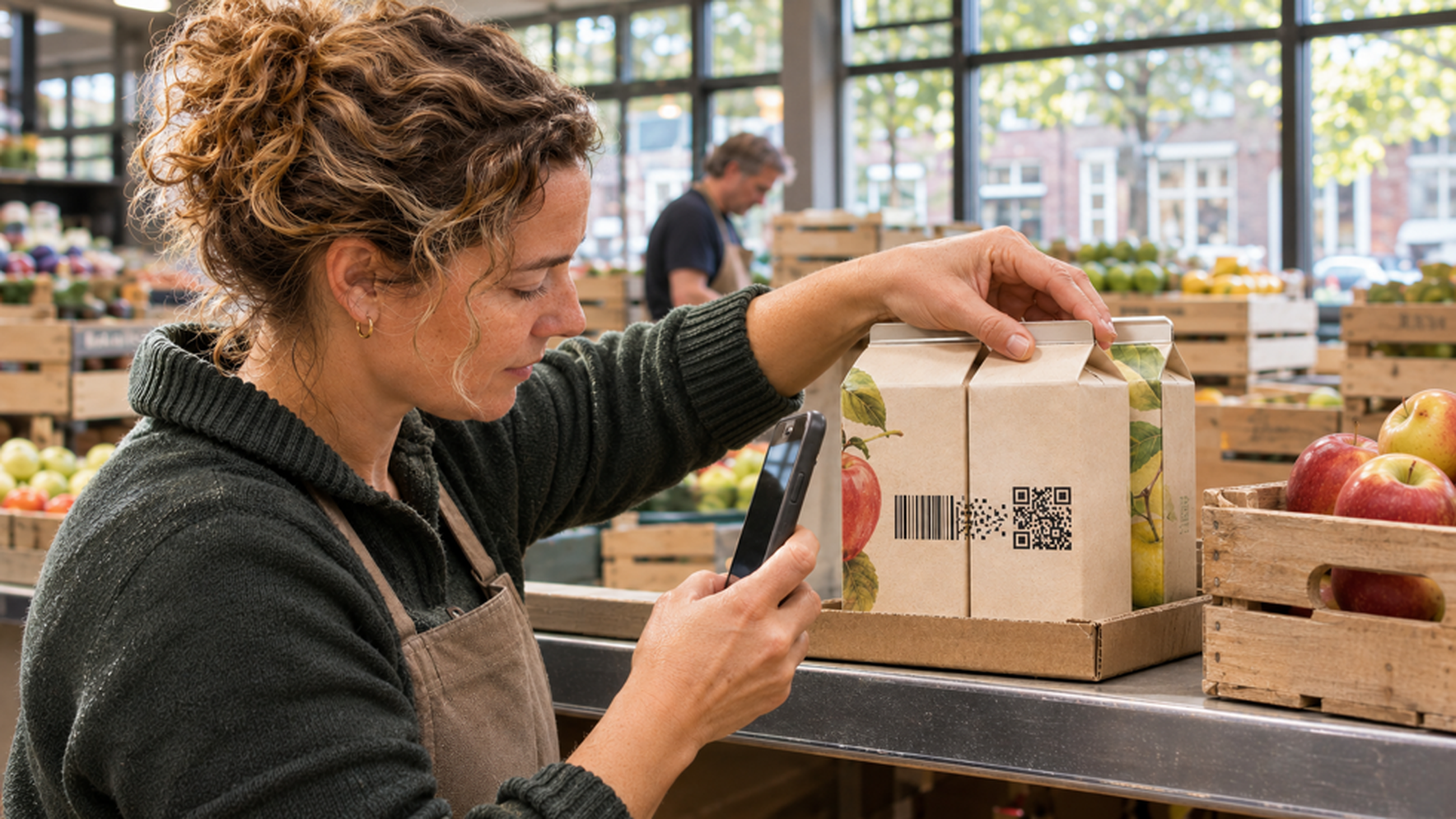
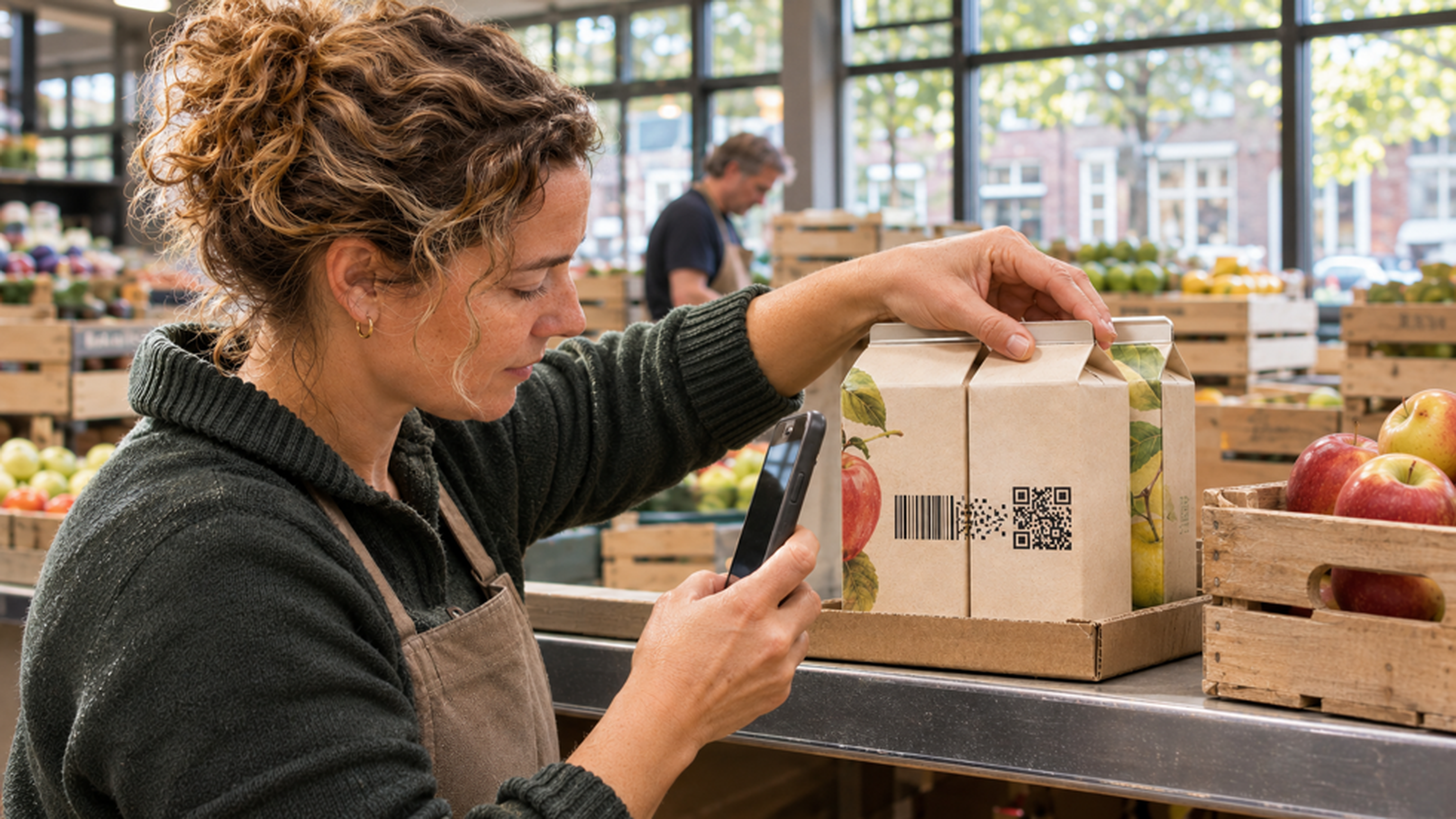
The GS1 QR Code always contains a product code (GTIN), can be scanned using a smartphone and can also be scanned at the checkout. Through the open GS1 Digital Link embedded in the code, the same code can also direct users to different types of information, depending on who scans it. It acts like a traffic controller, determining which product data is displayed. This is a fundamental difference compared with an ordinary QR code.
A gateway to product information
The GS1 QR Code connects products to the information that businesses and consumers need. It helps businesses optimise their supply chains, for example by improving inventory management.
In addition, the GS1 QR Code offers opportunities to improve the online discoverability of products and communicate directly with customers. “By scanning the code on the packaging, consumers can access, for example, the story behind a product, usage tips or special offers. This creates a direct connection between the brand and the consumer, even after the purchase,” says Karmiggelt.
The code can also provide access to information required to bring products to market, such as a Digital Product Passport or certificates relating to product sustainability. This enables businesses to make legally required product information available.
A reliable foundation for AI
“AI needs a reliable foundation to be able to use product information. After all, products will only be discoverable if their data is recorded in a structured and standardised way, and GS1 provides that foundation,” says Karmiggelt.
“That is why our anniversary is not just about looking back. As more information is recorded and shared, the importance of a neutral organisation such as GS1 continues to grow. GS1 helps businesses establish common standards and agreements for doing so. The past 50 years have shown what becomes possible when organisations work together in this way, and we will continue to build on that in the years ahead. Technology will keep changing, but the challenge remains the same: ensuring that products can be identified unambiguously and that reliable data can flow throughout the entire supply chain – and now also be used effectively by AI.”
Source: GS1 Netherlands“For 50 years, the strength of GS1 has lain in something that seems remarkably simple: businesses agreeing on how to identify products and share information about them,” says Mirjam Karmiggelt, CEO of GS1 Netherlands. “The barcode demonstrates what such a shared agreement can achieve, as it has now become an indispensable part of everyday life.”
Albert Heijn was instrumental in founding GS1 Netherlands. The supermarket entrepreneur recognised the potential of the barcode in the United States and championed its introduction in the Netherlands. This required agreements between supermarkets and manufacturers, which were established through GS1 Netherlands, of which he became the first chairman.
From barcodes to ever-increasing amounts of data
Beneath the familiar barcode is the product code (GTIN (Global Trade Item Number)), a globally unique identification number that makes a product recognisable to everyone and enables us to pay for it at the checkout. This product code can be linked to information such as the product name, brand, ingredients, packaging details and certification information.
“Fifty years ago, the main questions were: which product am I looking at, and how much does it cost? Today, both businesses and consumers want to know much more about products,” says Karmiggelt.
This is no longer limited to supermarkets. Reliable product information is becoming increasingly important in sectors such as healthcare, construction, fashion, agriculture and DIY. It is essential for efficient and sustainable supply chains, for bringing products to market and for complying with legislation.
Fifty years ago, the main questions were: which product am I looking at, and how much does it cost? Today, both businesses and consumers want to know much more about products.
The transition from barcodes to the GS1 QR Code
Karmiggelt explains: “We are in the middle of the transition from barcodes to the GS1 QR Code. Businesses need to capture increasing amounts of data, which is why it was not GS1 itself, but businesses collectively, that decided to adopt our QR Code. This means the code is evolving from a means of identification into a link between the physical product and the digital world.”
The GS1 QR Code always contains a product code (GTIN), can be scanned using a smartphone and can also be scanned at the checkout. Through the open GS1 Digital Link embedded in the code, the same code can also direct users to different types of information, depending on who scans it. It acts like a traffic controller, determining which product data is displayed. This is a fundamental difference compared with an ordinary QR code.
A gateway to product information
The GS1 QR Code connects products to the information that businesses and consumers need. It helps businesses optimise their supply chains, for example by improving inventory management.
In addition, the GS1 QR Code offers opportunities to improve the online discoverability of products and communicate directly with customers. “By scanning the code on the packaging, consumers can access, for example, the story behind a product, usage tips or special offers. This creates a direct connection between the brand and the consumer, even after the purchase,” says Karmiggelt.
The code can also provide access to information required to bring products to market, such as a Digital Product Passport or certificates relating to product sustainability. This enables businesses to make legally required product information available.
A reliable foundation for AI
“AI needs a reliable foundation to be able to use product information. After all, products will only be discoverable if their data is recorded in a structured and standardised way, and GS1 provides that foundation,” says Karmiggelt.
“That is why our anniversary is not just about looking back. As more information is recorded and shared, the importance of a neutral organisation such as GS1 continues to grow. GS1 helps businesses establish common standards and agreements for doing so. The past 50 years have shown what becomes possible when organisations work together in this way, and we will continue to build on that in the years ahead. Technology will keep changing, but the challenge remains the same: ensuring that products can be identified unambiguously and that reliable data can flow throughout the entire supply chain – and now also be used effectively by AI.”
Source: GS1 Netherlands